Bristol vs the world

A travel (and sometimes fashion) blog about exploring Bristol and the rest of the world, one post at a time.

Category: Western Europe

Food Friday: Lisbon eats
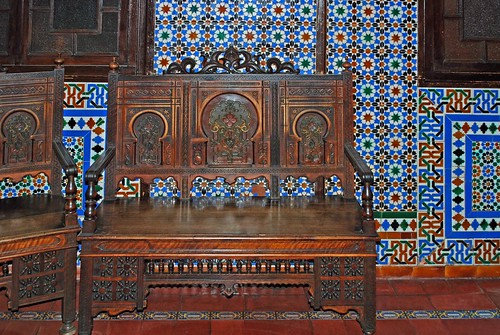
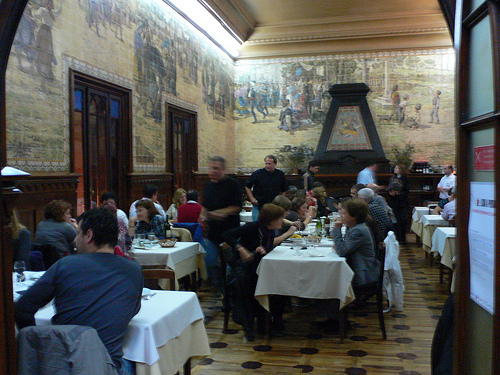
Interior of the Casa do Alentejo. Credit for both photos: Retrorocketrick on Flickr
Casa do Alentejo dining room. Photo credit: Heather on her Travels

Casa do Alentejo
Rua Portas Santa Antao, Rossio
Although situated in one of the more touristy areas of town, this traditional Portuguese restaurant is not an immediately easy find. Not only is the building relatively unassuming from the outside – you certainly wouldn’t guess quite what was inside – but the ground floor is home to exhibition space showcasing Alentejan culture. The restaurant itself is situated upstairs, through a room filled with scattered furniture.

This may sound like a lot of hassle to go to for some food, but this restaurant is worth it if only for the gorgeous interior. Formerly the Palacio Alverdo, the building originally dates from the 17th century though did undergo significant work in 1918. It was renamed the Caso do Alentejo in the 1930s, when it became the secret place of Alentejans now living in Lisbon. Today it remains filled with the bright tiles that sum up the look of Lisbon, and even a stunning indoor courtyard. The restaurant itself features a murals created using these tiles and floors and furniture made of stately dark oak.

Yet despite its exuberant appearance, the feel of the restaurant itself is actually quite relaxed – there’s no need to dress up like you’re going for a royal dinner. Moreover the staff are friendly, chatter from fellow diners fills the dining hall creating a lively atmosphere, and the menu is reasonably priced. Although most patrons looked like tourists, we spotted some customers who could well have been locals too. The food itself isn’t outstanding, it was still tasty and a great example of traditional regional cuisine: coupled with the incredible setting, it made for an unforgettable dining experience.

Interior of the Cantinho da Paz. Photo Credit: Lisbon Restaurants

Cantinho da Paz
Rua da Paz 4, Santa Catarina
Tucked away in the Santa Catarina area, this family-run Goan restaurant is another one worth putting in the effort to find (and the risk of pushing open the door even if it looks closed!). It was small and friendly, and more importantly, we tasted some of the best curries we’d ever had: really rich and full of flavour. At around €15 for some of the mains, it’s not the cheapest eat in Lisbon but it was by far and away the best we experienced in terms of the food.

Restaurante Principe do Calhariz. Photo Credit: Virtual Tourist

Restaurante Principe do Calhariz
Calcada do Combro, 28, Bairro Alto
On the outskirts of the Bairro Alto, this bustling restaurant may look plain in décor, but its traditional Portuguese food is anything but. With young Lisboetas seemingly outnumbering tourists quite dramatically, this is a great place to sample ‘real’ Portuguese food – worth a visit despite the sometimes brusk service (probably because of quite how busy it is). I recommend taking a guidebook to attempt to translate the Portuguese menu, as I’m pretty sure we spotted some dishes that weren’t on the English menu we used – though I might be completely wrong!

The incredible Pasteis de Nata. Photo credit: Imaginacao Ativa
Exterior of Pasteis de Belem (my photo, for a change!)

Pasteis de Belem
Rua de Belém, 92, Belem
No visit to Lisbon is complete without a visit to this famous pastry shop. Sure you can buy Pasteis de Nata (custard tarts) at most cafes in Lisbon, but these ones really are the best – and worth the queues. Sprinkle on cinnamon from the packets provided, eat warm and savour.

Priceless Lisbon

Museu Colecca Berardo, Bélem. Photo Credit: Wikitravel

Lisbon is a great city for those travelling on a budget. Food and drink is affordable and much of the experience of the city is in discovering its many miradouros, listening to the strains of fado in the backstreets of the Alfama and getting lost in the the Bairro Alto.

And, even better, many of the cultural sites that would come at a price in many other European cities are free. Here are my three favourite priceless cultural discoveries during our time in Lisbon. This said, with only three days to explore we couldn’t cover even a tiny percentage of what was on offer, so I know I’ll have missed some great sites here. If you have any recommendations, please leave them in the comments. (NB. I will be covering the majority of Belém attractions such as the monastry in a separate post. Promise!)

Wine bottle tree, Museu Colecca Berardo. Photo Credit: Fat Pig in the Market 

Museu Coleccao Berardo, Belém
Open 7 days a week, 10am – 7pm (last entrance: 6.30pm)

This modern art museum is home to the collection of billionaire José Berardo. It features both permanent and temporary exhibits by new contemporary artists and renowned names such as Warhol, Picasso and Hockney. My favourite exhibit was Mappa Mundi, a temporary collection featuring artworks inspired by geographical maps, from collages to more political pieces.

There’s plenty here to keep contemporary art lovers entertained for hours. However even if you think that’s not your thing, it’s still worth paying the museum a visit if you’re in the area. After all, it being free of charge you can’t really go wrong. And it’s got really good air conditioning.

MUDE Museum, Lisbon. Photo Credit: Archdaily

Mude: Lisbon Design & Fashion Museum
Free of charge
Open Tuesdays – Sundays, 10am – 6pm (8pm in summer)

If our B&B host hadn’t recommended it, we would have walked straight past the Fashion & Design Museum. It’s not that it’s hard to find – with a huge sign outside of its central location it’s arguably harder to miss – but we just wouldn’t have considered paying it a visit. In fact, even then the only reason we did go in was because we were walking past and had some time to spare.

Actually, the Museum is worth planning into your trip, if only to catch a glimpse of the warehouse-style building in which it is housed, complete with exposed plaster and concrete. Its contents are pretty interesting too. Arranged by decades, they take you on a journey through the history of fashion and design by designers such as Vivienne Westwood, Yves St Laurent and Phillipe Starck. The decades are accompanied by a brief overview of history during the period, contextualising the designs of the time. , 50’s, 60’s and 70’s music plays softly in the background, growing louder as you approach those decades.

Fascinating and informative and full of lovely pieces to lust over, this museum is definitely worth a visit, especially if you’re into vintage looks or design and fashion in general.

Roman Ruins, Lisbon. Photo Credit: Polewn

Núcleo Arquelógico da Rua dos Correeiros
Rua dos Correeiros, no 9, Baixa
Very limited hours, visit the website for more details

I’ll be honestI can only really half recommend this attraction. We did go in to the museum section, featuring a number of artefacts. But, unless you’re an archaeologist or ancient historian, this small space is unlikely to hold your attention for long, although the woman working there when we visited was extremely knowledgeable and definitely worth talking to.

However, what I really want to recommend is the Roman site – a critoportico – which lies under this space, offering an insight in Lisbon life before an earthquake destroyed much of the city in 1755. The bank offers occasional tours of this area, some of which are conducted in English. We left it to late to enquire about when the next tour would be (unfortunately we had to be on a bus to the airport at the same time), so I can’t recommend it first-hand. However it’s definitely something I’ll make an effort to to try and arrange if I ever find myself back in Lisbon. Learn from my mistakes and investigate early on in your trip if you’re interested.

Ode to Lisbon

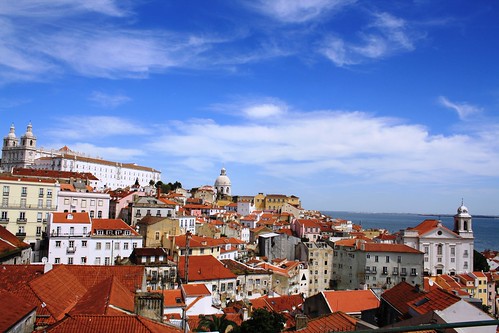
View over the Alfama district, Lisbon

I bet you know someone like it. Someone so comfortable in their own skin that it doesn’t matter what they wear or believe. They liked knitting before it was cool and can throw a mean sprinkler on the dance floor (in fact, their moves often resemble Neil’s in The Inbetweeners Movie, but they make it look so good you want to join in). They don’t crave popularity or seek attention – they’re actually pretty grounded. But there’s just something about them – about their quiet confidence, their good nature, their refreshing view of the world – that draws you in.

At the seafront, Lisbon: people and trees share a seat

When it comes to Western European cities, Lisbon is the equivalent of that person. It’s not many people’s first choice for a place to visit though. It’s not as hip or historical as Berlin or Amsterdam, as renowned for its culture and romance as Paris, as fast-paced and multi-faced as London. But Lisbon doesn’t care what you think. It doesn’t need you to think of it as beautiful or historical or party central. For a city built on seven hills, it’s incredibly laid back. And for that reason, it’s more exciting and relaxing and intoxicating than any other European city I’ve visited.

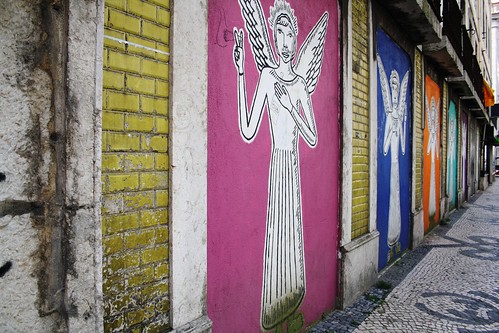
Graffiti/wall art and pavement tiles near central Lisbon
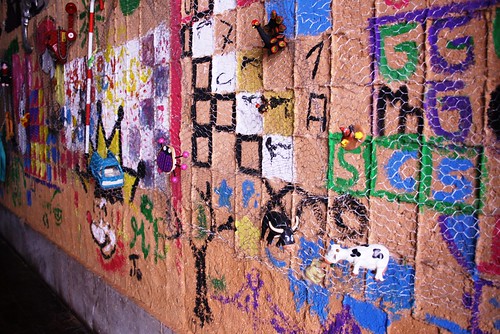
Library wall art

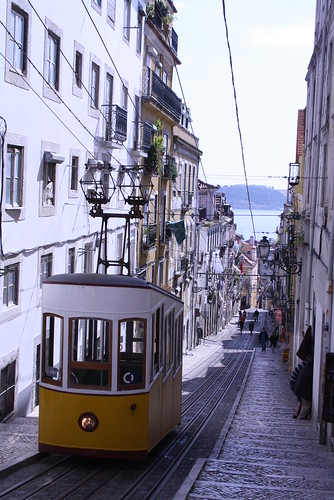
Lisbon’s not needing to conform is immediately apparent in its appearance. It is not typically beautiful. It doesn’t have an equivalent to Barcelona’s Gaudi architecture, it’s not as elegant as Paris, it isn’t as picture-perfect pretty as Bruges. But there is something about it that is undeniably attractive. It features ‘wall art’ that may be graffiti but might not be. It has cobbled streets and narrow backstreets and traditional yellow trams. Blue and turquoise and yellow tiles (azulejos) adorn walls and doors and streets; it doesn’t matter that they’re sometimes chipped. And then there’s the viewpoints, or miradouros. Looking out over the sea, or the city, or both, each offers a different perspective and every one takes your breath away. They’re best enjoyed with a glass of sangria of beer from the kiosks selling food and drink you will often find at these spots (it’ll be well deserved once you’ve trekked up the steep hills). Or, even better, from the (usually cheaper) newsagent down the road.

View from the Miradouro de Sao Pedro de Alcantara


Also, the city’s cultural sights might not be as renowned as the Berlin Wall, the Louvre or the Sagrada Familia, but there is still lots on offer.&nbsp I’ll discuss specific attractions in more detail in another post, so for now I’ll just use the old cliché: Lisbon has something for everyone, from Design Museums to Bélem’s monastry to the modern attractions of the Parque das Nacaoes. What’s more, many of the museums here are free, making this a perfect city break for those on a budget.

Mahjong bar, Bairro de Alto. Photo Credit: What Katie Does

But the best experiences in Lisbon are often those you just
happen upon. Although hilly, the majority of the city is quite small and so easily walkable for most people (there are trams on hand however for those with mobility issues, or just tired feet). I’m always an advocate of exploring by foot if you can, and in Lisbon this is truer than ever. Not only does is walking the best way to explore the crooked backstreets, but it also enables you to soak in the this city. So for me, Lisbon is the smell of sardines barbecuing in the Alfama. It’s watching older Lisboetas challenge one another at chess in the afternoon sun at the Jardim de Principe Real and drinking sangria with the backdrop of the ocean and the soundtrack of locals playing guitar in the Placa de Santa Catarina. It’s meandering through the streets of the Bairro Alto as they fill with high-spirited drinkers, before entering a bar to find its lights are modelled on pak-choi and the standard bar snack offering is popcorn. It’s eating warm pasteis de nata (custard tarts) in a park in Belém and licking cinnamon from my fingers.

Famous Pasteis de Nata in Bélem. Add cinnamon and eat hot.

Lisbon is hardly undiscovered. Tourists aren’t rare and, as in most cities, there are areas in the centre that feel designated for them, such as the street lined with restaurants featuring men clamouring for your custom stood
outside or, for different reasons, the majority of Bélem. After coming second in Lonely Planet’s ‘must-visit cities of 2012’ pole – beaten only by Reyjavik – it is only going to grow in popularity. Nonetheless, it still feels
like you’re able an insight into the heart of local life in the city, much more easily than in any other cenral European capital. It just seems much more accessible and welcoming to visitors in that way. And regardless of how popular it becomes, I think Lisbon’s the sort of place that will be able to retain that charm.

Placa de Santa Catarina during one of its quieter periods

Perhaps this is because Lisbon is small, making it easy to unintentionally stumble upon the less touristy areas. But it could also be due to the Lisboetas. They’re friendly, they’re unpretentious, they’re happy. They
all seem exude the spirit of those aforementioned people who are just quite happy to be them, just
living their life how they want to do so. And with a city like Lisbon to live it in, who can
blame them.


Au Vieux de la Vielle, Lille

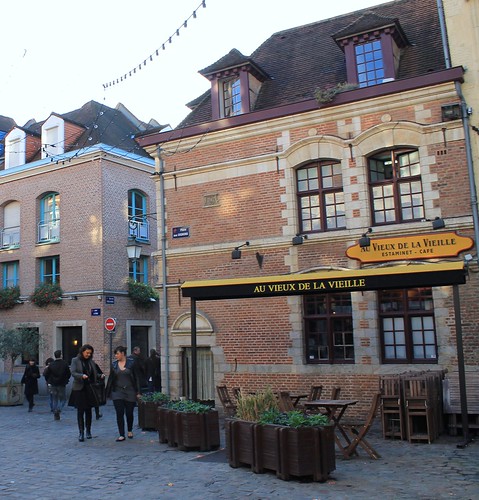
Anyone who knows me knows that I am no good at making decisions. Awful in fact – they’re pretty much my kryptonite. So deciding where to eat in Lille was no mean feat – confronted by lovely looking bistro-style restaurants on every street in the old town, I could have eaten in almost every one of them. We eventually chose Au Vieux de la Vielle, situated on the Place aux Oignons, based on its cosy appearance and affordable but interesting menu.

Once inside, the first good sign was that the waitress addressed us with a stream of French. Usually something about our appearance seems to immediately give us away as British wherever we are (or at least have us mistaken for Germans), so the lack of consideration that we might not be local, or at least French, was a bonus – after all, no Frenchman would eat in a bad restaurant, would they? (Despite this, when it eventually transpired that our French was below par we were offered English menus and a friendly English-speaking waiter, who let us try to speak French but was helpful and understanding when we failed. So anyone with a similar problem shouldn’t be put off from visiting the restaurant.) And as it turned out, a huge range of French people were here, from ladies lunching to families, young groups of friends to office workers on a long lunch. Good sign number two, in my book.

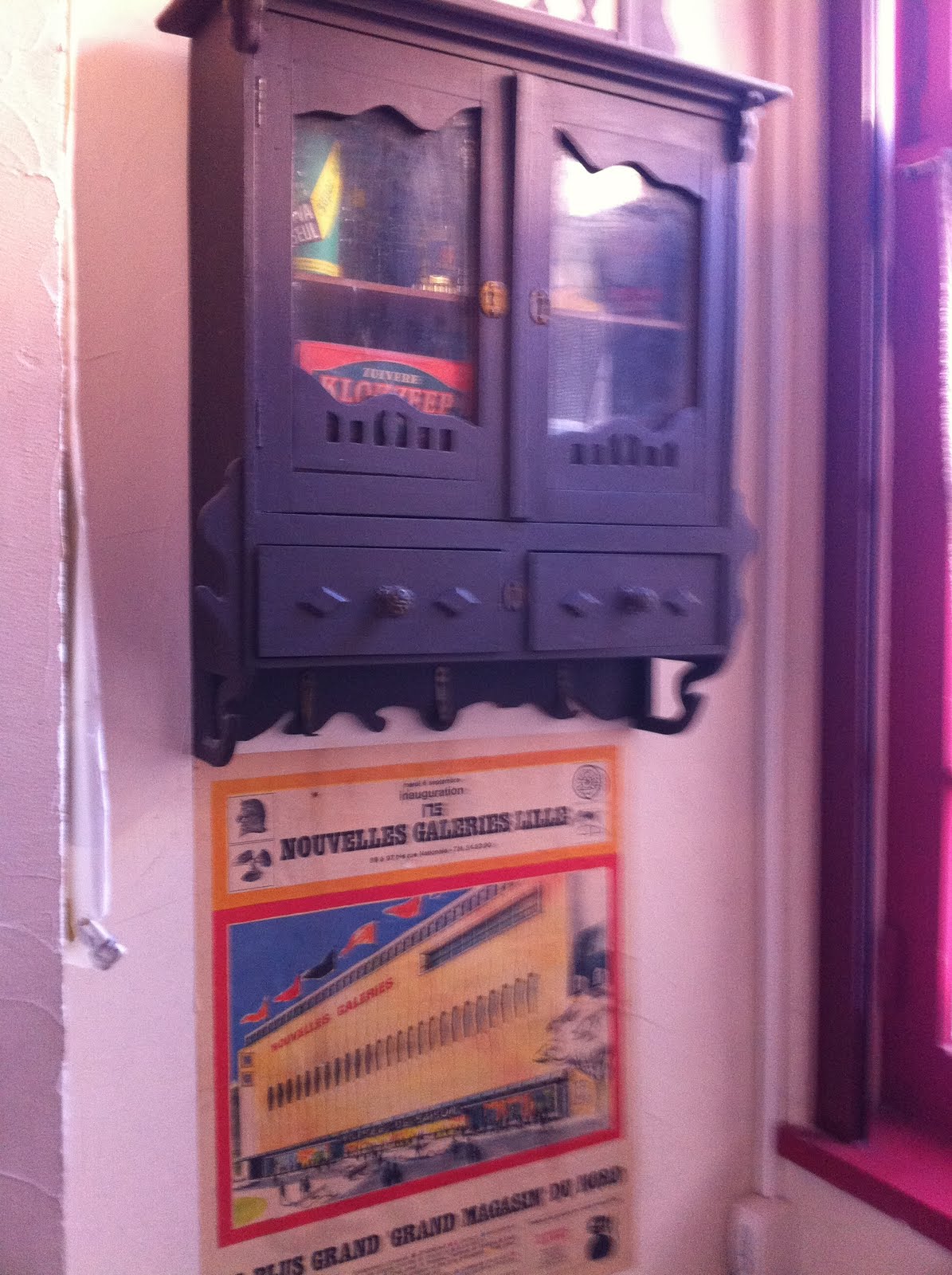
So, good sign number three – its quirky feel. The restaurant’s aim, and the reason for it’s name, ‘The Old of the Old’, is to produce nostalgic dishes that feature in the French’s childhood. The building reflects this; it feels as though you could be eating in someone’s (well, a French someone’s) house. Ascending from narrow stairs onto the first floor, you find yourself in a cosy room decorated with tarnished saucepans, old paintings and black and white photos.

It being an old building, there’s not an awful lot of space and – as you can probably tell from the photos – the tables are pretty close to one another. Sometimes this could prove awkward, but there was enough enough chatter and background noise that it was loud enough not to feel like you’re unintentionally eavesdropping on those around you, without being so loud that it was obtrusive on your own meal. Some of this background noise included what sounded like traditional French songs, adding to the nostalgic atmosphere.

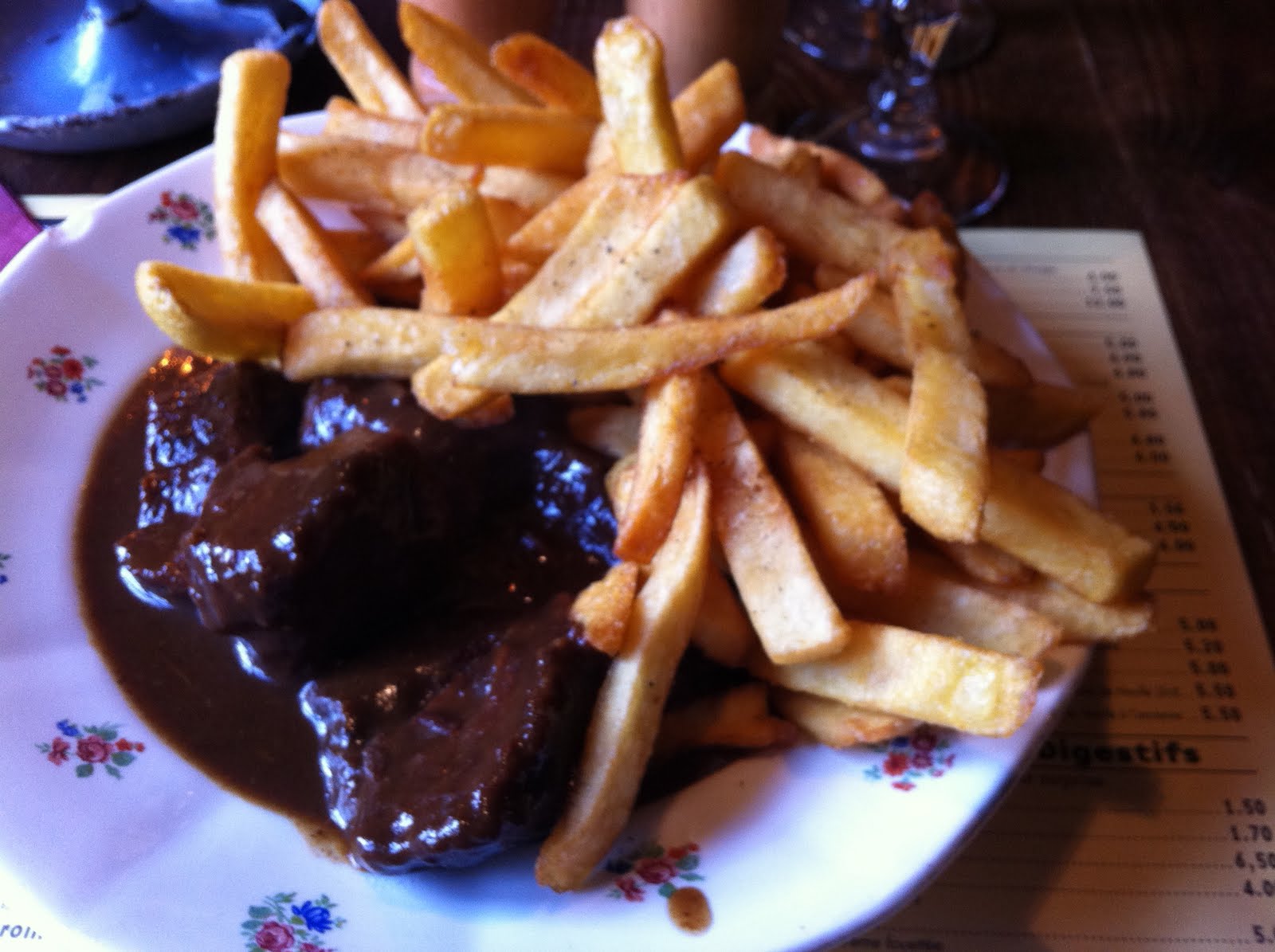
So we were already off to a great start before we’d even tried the food. John had vol au vent, chicken in puff pastry and mushroom sauce, which was perfectly creamy and full of flavour. Intrigued, I chose the beef stew in a beer sauce with gingerbread and brown sugar. I thought it could be a bit sweet, but needn’t have been concerned – it was hearty and the gingerbread and brown sugar added a gorgeous richness to the meal. Both dishes were accompanied by a very generous serving of chips (other options were available). John had a beer, while I had the house white, and we were both happy with our choices.

Although we were too full to sample the desserts, they looked amazing. And the after-dinner drinks of tea and coffee were served in fun-looking, old-fashioned tin pots which looked intriguing and also almost tempted me to indulge in one.

Costing about £15 each for a main course and drink, the meal was pretty averagely price, though probably a little cheaper than you’d pay for the same food and quality in the UK. I’d certainly recommend it to anyone visiting Lille who isn’t looking to splash out on the town’s more high-end restaurants. Its great atmosphere and even better food made for the perfect meal to warm us up and send us on our way for an afternoon of sightseeing on a brisk, December day.

Read more about Lille here, or visit the restaurant’s website.

One day in Lille

“You’re going to Paris?” The initial reaction of my friend when I told her I was picking up Eurostar tickets. Most people have heard of Lille, but it’s more that city you know because it’s a stop on your way somewhere else, or because you changed there and almost got on the wrong part of a complicated train and had to run halfway down a platform with a suitcase in tow to get the right one (not that the latter has ever happened to me. Obviously).

But Lille is actually a destination in its own right. And situated just 90 minutes from St Pancras, 1 hour from Ashford or 1 hour 20 minutes from Ebbsfleet, it’s a legitimate day trip destination. Which is exactly what we chose to do: having caught the 7.30 train from London, we arrived in Lille bright and early at 10 o’clock and left at 8.30, leaving us with over nine hours (not counting checking back in in the evening) to explore the city.

Lille was pretty sleepy when we arrived. The big chain stores were open, however, so if you came here to shop you could do that all day. Instead, we decided to do some sightseeing. First up was a trip to the tourist office, where we came out armed with a selection of free flyers offering city maps in varying degrees of detail. These guided us to the Citadel and zoo, a relatively easy 10-15 minute walk from the town centre.

Situated within a park, much of the star-shaped Citadel is still intact. A moat still surrounds its outer walls; follow it for a picturesque walk. Those interested in visiting the Citadel itself should investigate this possibility beforehand – the inner sections are accessible by appointment only, with the exception of a few hours on Sundays from May to August.

The park is also home to a small funfair with trampolines, mini rollercoasters and the like – perfect if you have kids, though check the opening hours. It was very much closed when we were there, its subsequent desolation almost spooky.

But perhaps my favourite aspect of the park was the zoo. The best bit of this being that it’s free! Perhaps unsurprisingly it’s not quite up there in standards as bigger (more expensive) zoos like London and San Diego, and doesn’t take much more than an hour to amble round. It would probably take longer on a day when the animals were more active mind (although we got to see most of the residents, we only really got a show from one monkey – presumably due to the cold). But even though they were a bit sleepy, there were plenty of interesting animals to see – the red panda, various breeds of monkeys and giant tortoises were my highlights.

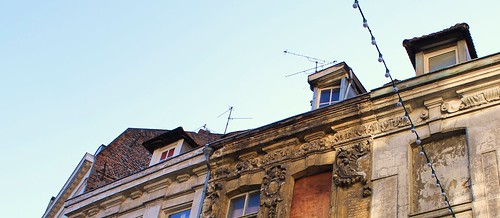
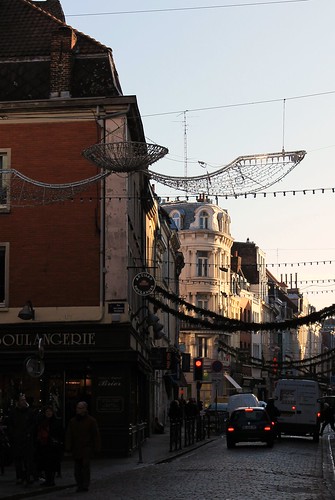
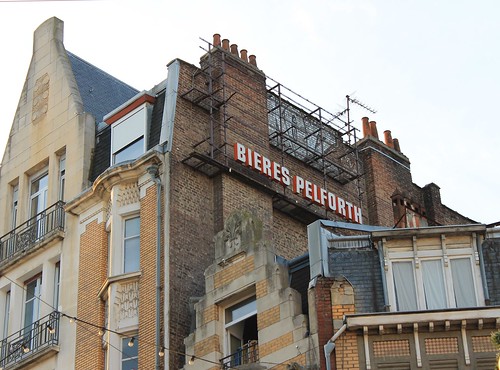
Our next stop was the old part of Lille. Narrow, cobbled streets, wooden shutters, those boxy windows: if you were asked to draw a quintessential European town it would look something like this. There are also lots of lovely boutiques, particularly for home interiors, but also for clothes and a few food outlets too. Yet despite browsing for Christmas present ideas and being rather taken by the tea shop paraphernalia, we came away empty handed; particularly with the Euro to Pound exchange rate, we found that nothing was particularly cheap, and, with the exception of food, you could probably find similar homeware items back in the UK. They’re still lovely places to browse though, each one with its own unique feel. Everyone is so friendly too – in almost every shop they took the time to say both ‘bonjour’ and ‘merci, au revoir’, regardless of how busy they were. As someone who does most of their shopping in central London, this was a bit of a (pleasant) shock to the system!

A particular recommendation is the Hippy Market, despite the naff name. A vintage shop on Rue de la Clef in the old town, it was bursting with clothes helpfully arranged by type and colour, available at not-too-bad prices. In fact, Lille seemed like a pretty good place to pick up antique items and vintage accessories in general, though bargaining without decent French might challenging.

Another place worth visting to find interesting odds and ends is La Vieille Bourse, or the Old Stock Exchange, in the centre of Lille. The central courtyard was housing a collection of stalls when we visited (apparently on other days it might be home to flourists or chess players). It wasn’t the highest-end market in the world, but it offered some cheap and different souvenirs, especially for those interested in old French comics, newspapers and advert prints.

However, my favourite shop wasn’t so much a shop as a workshop. On Rue Saint Jacques, we came accross a violin workshop, which Google suggests belongs to Jean Marc Panhaleux (for perspective as to how exciting this is, his last bow went for over $2,000 at Christie’s!). Completed violins are displayed in the window and you can see him at work. After he caught me gawping at the violins (I used to play and am still itching to get back into it, OK!), I felt a little bit embarassed about trying to take a photo, though. And my French isn’t good enough to ask whether that would be OK. Excuses, excuses, I know.

After all this walking, it was definitely time for some food. I often throw caution to the wind in France and head for the toursity areas as the food tends to be good (not as good as the best places, but I can’t afford the best places) and they often have pretty good menu deals. However when wondering round the back streets we’d seen so many gorgeous looking cafes and restaurants that we had to try one out. We finally decided on Au Vieux de la Vielle, on the Place Aux Oignans – read more here.

Talking of food, a must visit in Lille is Meert. Although we were browsing with our eyes only, next time I could definitely be tempted to sit down and sample one of the famous pastries!

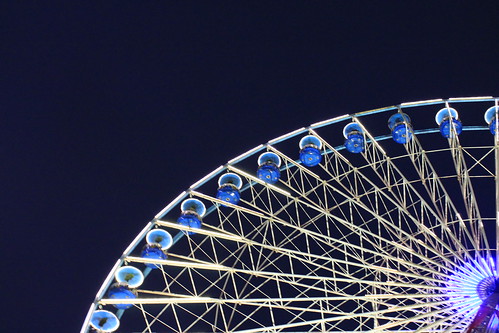
A bonus about visiting Lille at Christmas is, of course, the Christmas market and big wheel area. Christmas music plays around the huge ferris wheel (both being afraid of heights, we didn’t venture on!). Although the Christmas market itself probably isn’t a key reason to visit Lille (it’s quite small and very expensive), it’s still worth a wander round, if for no other reason that the hot Breton Cider that was available (for those who have experienced the cold version of this amazing drink in Soho’s The French House pub – it’s like that, but better). We slipped it slowly after sunset while admiring the lovely Christmas lights and the stunning scenes of the city by night.

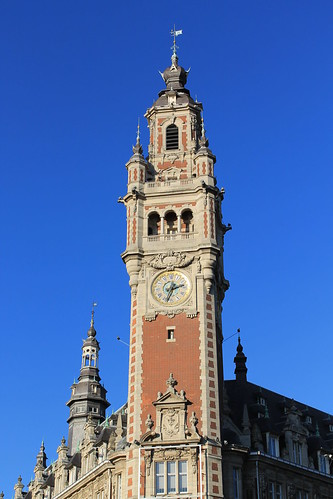
I have to admit that, unless you’re planning on doing a few museums (there is a good selection of art galleries), nine hours in Lille is probably more than necessary. In future I think I’d plan to arrive around lunchtime, which would also allow for a few extra hours in bed. But that’s probably my only negative. Easily navigable on foot, pretty with a mix of striking important buildings and low-key, cobbled backstreets, and offering an excellent mix of sightseeing, shopping and eating, Lille is an ideal day trip destination. And most importantly of all, there’s a Carrefour five minutes from the Eurostar station – so you can stock up your wine cabinet cheaply, making it value for money too.

See more photos on Flickr.