Bristol vs the world

A travel (and sometimes fashion) blog about exploring Bristol and the rest of the world, one post at a time.

Ode to Lisbon

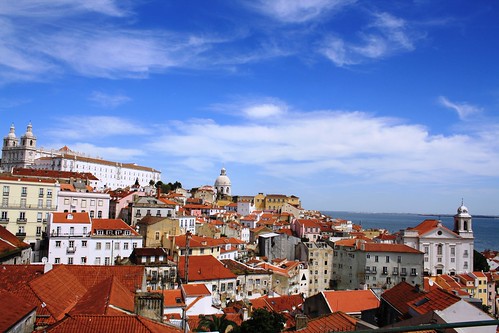
View over the Alfama district, Lisbon

I bet you know someone like it. Someone so comfortable in their own skin that it doesn’t matter what they wear or believe. They liked knitting before it was cool and can throw a mean sprinkler on the dance floor (in fact, their moves often resemble Neil’s in The Inbetweeners Movie, but they make it look so good you want to join in). They don’t crave popularity or seek attention – they’re actually pretty grounded. But there’s just something about them – about their quiet confidence, their good nature, their refreshing view of the world – that draws you in.

At the seafront, Lisbon: people and trees share a seat

When it comes to Western European cities, Lisbon is the equivalent of that person. It’s not many people’s first choice for a place to visit though. It’s not as hip or historical as Berlin or Amsterdam, as renowned for its culture and romance as Paris, as fast-paced and multi-faced as London. But Lisbon doesn’t care what you think. It doesn’t need you to think of it as beautiful or historical or party central. For a city built on seven hills, it’s incredibly laid back. And for that reason, it’s more exciting and relaxing and intoxicating than any other European city I’ve visited.
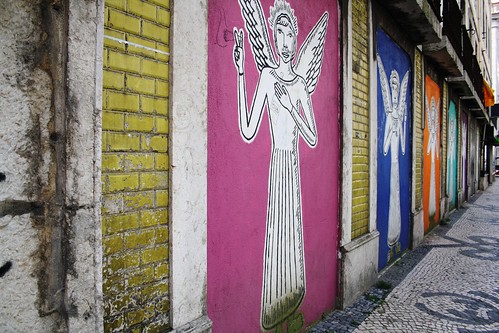
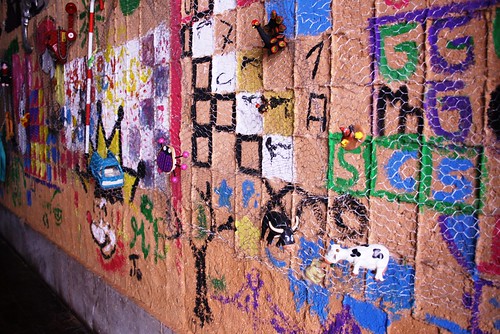
Graffiti/wall art and pavement tiles near central Lisbon
Library wall art

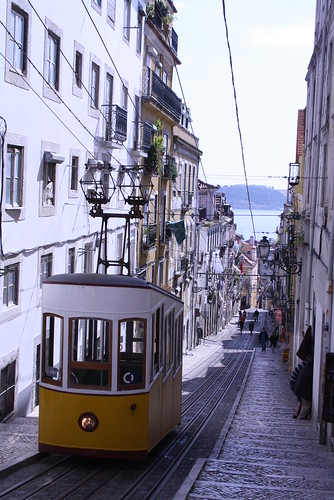
Lisbon’s not needing to conform is immediately apparent in its appearance. It is not typically beautiful. It doesn’t have an equivalent to Barcelona’s Gaudi architecture, it’s not as elegant as Paris, it isn’t as picture-perfect pretty as Bruges. But there is something about it that is undeniably attractive. It features ‘wall art’ that may be graffiti but might not be. It has cobbled streets and narrow backstreets and traditional yellow trams. Blue and turquoise and yellow tiles (azulejos) adorn walls and doors and streets; it doesn’t matter that they’re sometimes chipped. And then there’s the viewpoints, or miradouros. Looking out over the sea, or the city, or both, each offers a different perspective and every one takes your breath away. They’re best enjoyed with a glass of sangria of beer from the kiosks selling food and drink you will often find at these spots (it’ll be well deserved once you’ve trekked up the steep hills). Or, even better, from the (usually cheaper) newsagent down the road.

View from the Miradouro de Sao Pedro de Alcantara


Also, the city’s cultural sights might not be as renowned as the Berlin Wall, the Louvre or the Sagrada Familia, but there is still lots on offer.&nbsp I’ll discuss specific attractions in more detail in another post, so for now I’ll just use the old cliché: Lisbon has something for everyone, from Design Museums to Bélem’s monastry to the modern attractions of the Parque das Nacaoes. What’s more, many of the museums here are free, making this a perfect city break for those on a budget.

Mahjong bar, Bairro de Alto. Photo Credit: What Katie Does

But the best experiences in Lisbon are often those you just
happen upon. Although hilly, the majority of the city is quite small and so easily walkable for most people (there are trams on hand however for those with mobility issues, or just tired feet). I’m always an advocate of exploring by foot if you can, and in Lisbon this is truer than ever. Not only does is walking the best way to explore the crooked backstreets, but it also enables you to soak in the this city. So for me, Lisbon is the smell of sardines barbecuing in the Alfama. It’s watching older Lisboetas challenge one another at chess in the afternoon sun at the Jardim de Principe Real and drinking sangria with the backdrop of the ocean and the soundtrack of locals playing guitar in the Placa de Santa Catarina. It’s meandering through the streets of the Bairro Alto as they fill with high-spirited drinkers, before entering a bar to find its lights are modelled on pak-choi and the standard bar snack offering is popcorn. It’s eating warm pasteis de nata (custard tarts) in a park in Belém and licking cinnamon from my fingers.

Famous Pasteis de Nata in Bélem. Add cinnamon and eat hot.

Lisbon is hardly undiscovered. Tourists aren’t rare and, as in most cities, there are areas in the centre that feel designated for them, such as the street lined with restaurants featuring men clamouring for your custom stood
outside or, for different reasons, the majority of Bélem. After coming second in Lonely Planet’s ‘must-visit cities of 2012’ pole – beaten only by Reyjavik – it is only going to grow in popularity. Nonetheless, it still feels
like you’re able an insight into the heart of local life in the city, much more easily than in any other cenral European capital. It just seems much more accessible and welcoming to visitors in that way. And regardless of how popular it becomes, I think Lisbon’s the sort of place that will be able to retain that charm.

Placa de Santa Catarina during one of its quieter periods

Perhaps this is because Lisbon is small, making it easy to unintentionally stumble upon the less touristy areas. But it could also be due to the Lisboetas. They’re friendly, they’re unpretentious, they’re happy. They
all seem exude the spirit of those aforementioned people who are just quite happy to be them, just
living their life how they want to do so. And with a city like Lisbon to live it in, who can
blame them.



Food Fridays: Chez Bob, Belsize Park

Chez Bob’s colourful interior. Photo credit: chezbob.biz

With Hampstead’s many gastro pubs just up the road, Belsize Park could easily be overlooked for interesting dining options. Especially as most of the restaurants lining this area of Haverstock Hill are your standard chains. But Chez Bob offers something different.

A restaurant called Chez Bob, and particularly a restaurant called Chez Bob in upmarket Belsize Park, is in danger of sounding – and being – pretentious. But in practice, the restaurant is a lot more ‘Bob’ than ‘Chez’. The floor is lined with brightly patterned tiles, the walls with cheerful, colourful wallpaper. Seemingly always busy, the restaurant’s soundtrack is the happy hum of others’ conversations. There’s also an outside dining area which is lovely in summer, and just far back enough from the road that you can ignore the passing traffic. All in all, Chez Bob is bright, friendly and fun and not at all show-offy. Service too is always great – the waiters don’t rush you, are friendly and seem happy to provide recommendations.

The restaurant’s name, presumably, comes from the its premise of ‘French bistro meets steak house’ (Chez being French, Bob being American-sounding – geddit?). In practice, I’d say it’s probably more upmarket British pub food, sometimes with a bit of a twist. But more important than what type of food it is exactly, is that there’s a lot of choice that means everyone will find something that suits both their tastes and budget: mains range from £6.95 – £19.95, with most being around £10 – £13.

Having been a bit of a regular at Chez Bob’s, I have come to particularly love the starter of Bob’s Nachos, which always come piled high and smothered in toppings. £6.50 might sound steep for a starter, but the huge portion can happily feed 3-4 hungry people, if not more.

Choosing a main is more difficult. You can choose from a range of burgers and sandwiches, comfort foods including as mac ‘n’ cheese (£6.95), and more full-on meaty options, such as steaks and ribs. I’m a huge fan of the lamb steak with sweet potato chips (£13.95). The steak is juicy, full of flavour, and always cooked perfectly (I go for medium-rare), and the sweet potato chips compliment it really well. My vegetarian sister particularly enjoys the goats cheese and red pepper burger (£8.95). Bob’s Beef Burger (£9.95, add £1.30 if you want cheese or bacon) always seems to go down well with everyone who tries it. Presentation of the food is also nice, with many mains served on thick wooden boards rather than plates.

If you’re feeling particularly hungry and aren’t on a budget, I recommend the ribs (£19.95). It’s hard to convey quite how large they are, but if I say that there’s a reason they don’t come with a side as standard you might start to get an idea. This is somewhere where quantity isn’t prided over quality, though, and my Dad’s always found them really tasty (I’ve never been brave enough to try them!).

The huge Chez Bob ribs. Photo credit: chezbob.biz

And it’s always worth saving room for dessert. I’m usually a chocolate girl when it comes to pudding – and I can’t deny that the chocolate brownie is good. But Chez Bob’s apple, raspberry and pecan crumble is absolutely stunning. I can’t say more than that it’s just perfect. You’ll just have to try it! As with the mains, though, dessert portions are pretty generous and most people would probably be more than satisfied with sharing one.

Although the list of wine and beer isn’t huge, it’s more than adequate. That said, the beers all hail from the other side of the Atlantic, which may be a problem for some. I’m also not sure what I think of the menu designating the wine as ‘cheap’, ‘decent’, ‘good’, ‘excellent’ and ‘Bob’s pick’: cute and quirky, or just embarassing if you order the cheap option? (Perhaps that’s the point.) There’s also a cocktail menu; ranging from £6.50 – £6.95, the cocktails aren’t cheap, but there is a half price Happy Hour from 5-7 on weekdays making them a more affordable choice. The Frozen Passion Fruit Daiquiri sounds particularly interesting.*

There’s also a good selection of non-alcoholic drinks. As well as the standard fizzy brands, you can also choose from juice, ginger beer, root beer, fresh lemonade (which is delicious), iced tea, smoothies and milkshakes (also delicious).

Chez Bob’s Crumble of Dreams (Picture Credit: chezbob.biz)

If I had one criticism, it’s that the main restaurant can get a little loud at times, meaning you sometimes have to shout accross the table. The outside always feels a little more relaxed but, this being England, eating alfresco isn’t always (or often) an option. As a result, the lively atmosphere makes this a venue more suited to dining with family and friends than a partner.

The only other ‘problem’ is that the restaurant can get very busy, so it’s always worth booking a table if you’re coming for dinner or a weekend lunch/brunch.

With some much choice and such great food, it’s hard to do Chez Bob particularly cheaply out of Happy Hour – though it is possible if you’re careful. Some of the dishes do seem a bit expensive – if you’d forgotten that you were in Belsize Park, paying £12.50 for fish & chips or £9.95 for a plain burger is a quick reminder. However whenever we’ve visited the food has always been excellent and the portion sizes more than generous; on my many visits, I’ve not once been disappointed. This, combined with the friendly service and fun atmosphere, make Chez Bob well worth a visit.

Chez Bob’s weekday 5-7 Happy Hour also extends to the food; during this time, you can get penne arrabietta, steak or Bob’s Burger with a glass of house wine, Red Stripe beer or soft drink for just £8.95.

Contact Details
Chez Bob
205-207 Haverstock Hill
Belsize Park, London
NW3 4QG
Telephone: 020 7435 4925
Website: http://www.chezbob.biz/
Menus: http://www.chezbob.biz/menus.php

Balboa Park

This is the last of the San Diego posts, and I couldn’t let the section finish without something about the beautiful – and ginormous – Balboa Park. Home to over 15 museums, a number of theatres – including The Old Globe which looks suspiciously like an older Globe theatre I know, a variety of different landscaped gardens, San Diego zoo and much, much more it would probably be impossible to cover the whole park in a short break, so it’s worth planning which bits you’d like to see in advance. We meandered through it after visiting the zoo, taking in the lovely architecture, relaxing in one of the gardens to the sounds of a saxophonist and marvelling as the planes landing into the city seemed to almost skim our heads (it seems that San Diegans like getting up close and personal with aviation). Unfortunately none of my photos came out amazingly, but hopefully they give you some sense of the area – and inspire you to visit to take better ones!

Apparently this is the most photographed view in Balboa Park – well I couldn’t not take it, could I?!
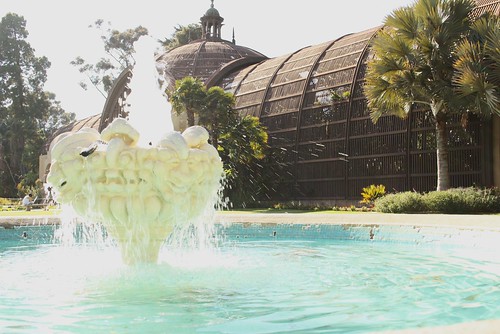
Infront of the Botanical Gardens
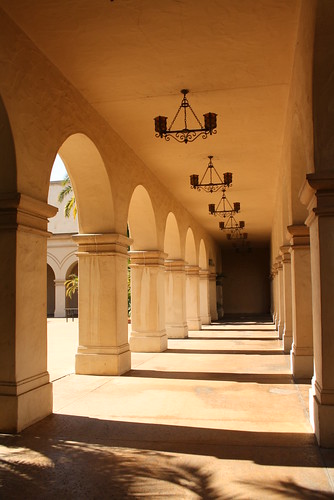
I particularly loved the architecture, and the way the light fell on the arches at the end of the day
San Diego Museum of Man, Balboa Park

Ghosts, cowboys and cocktails: Old Town San Diego

Whaley House. Photo credit: About.com

Cowboys and the Wild West conjure up three thoughts for me: John Wayne, Frontierland and the Hotel Cheyenne at Disneyland Paris, and the Will Smith song. None of these, as you’ve probably noted, are real. The thought that pioneers once road dusty streets in chaps and spurs is one of those that I still can’t get my head around having actually happened.

But Old Town State Historic Park, San Diego proves that such a world isn’t just confined to Westerns and theme parks. What you actually discover is somewhere that mixes its history with fun attractions and good booze (this having been a Mexican settlement, Tequila and Corona feature highly on menus). Though some might argue that these are one and the same.

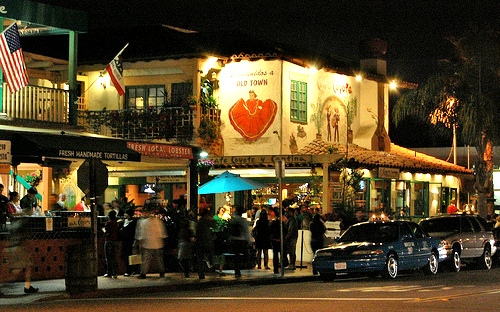
Some of the scenery, Old Town San Diego

Considered the birthplace of California, the Old Town was colonised by the Spanish in the late 18th century.* And while only seven buildings from the original old town actually remain – the rest fell victim to a fire in 1872 and were reconstructed in the 1960’s – it still provides a sense of history. Even as someone who equates the Wild West with fiction, I could picture how the bustling town might have felt 150, 200 years ago.

Although some of the buildings in Old Town have been turned into commercial premises, many more have been dedicated to recreating life in the 1800’s. Mason Street School is California’s first public schoolhouse, La Casa de Machado y Stewart contains commonly-used artifacts from the period and The Seeley Stables museums is a must-visit for anyone interested in the transport of the period.

One of the less desirable aspects of life in Old Town San Diego

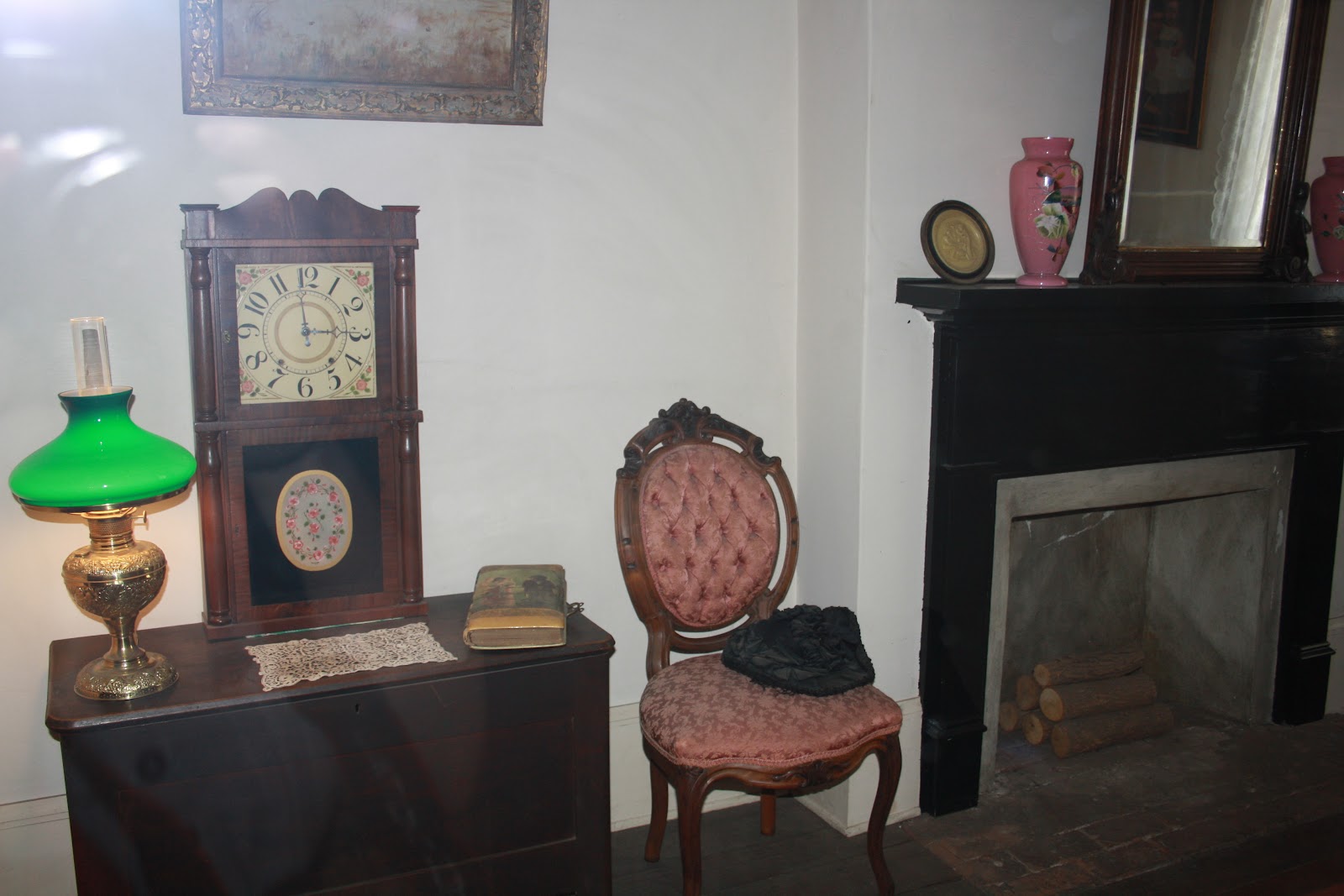
One of the attractions we visited was Whaley House, located off the main plaza at 2476 San Diego Avenue. We were drawn to it because of the claim that, according to America’s Most Haunted television programme, it is the most haunted house in the United States. Admittedly we weren’t actually expecting to see any ghosts (it was broad daylight and full of tourists), or even Woman in Black** levels of fear. But we did expect something a little spooky, or at least a bit of a laugh. The closest we came to a ghost, however, were the shapes produced by a combination of reflections and light in the glass barriers they conveniently happen to have erected between all the displays (cynical, us?).

‘Ghostly’ reflections, Whaley House, Old Town San Diego

This said, it was an interesting piece of history. For adults (or anyone old enough to spot the old glass trick), it’s probably not quite worth the entrance fee ($6 for adults, $5 for seniors, $4 for children aged 3-12). Families, however, should stop by – they provide lots of history about the house and the lives of those who live here and all the ones I noticed seemed to be enjoying the mix of history and potential frights! Make sure children speak to the staff too – not only did they appear very knowledgeable about the house, but they also seemed more than willing to share their own encounters with the house’s alleged spectres.

I would also be tempted to take the night tour to see if that provided a few more scares, though the ticket prices do rise to $10 for adults and $5 for children for these.

Our final stop was Café Coyote, a little down the road from Whaley House. There is no shortage of bars and restaurants in the Old Town serving Mexican food, most offering ridiculously cheap deals on Tacos in off-peak hours. Having not done our research (I know, I know) we lucked out with our snap choice of Café Coyote. Friendly service (waiters offering to take photos of the two of us on seeing my camera on the table), good atmosphere even in the off-peak mid-afternoon, and, more importantly my cocktail was strong while remaining flavoursome. There’s plenty of choice on the drinks menu too, with a wide variety of Margaritas and more varieties of tequila on offer than I knew existed! Though you’d expect nothing less from one of just two certified tequila houses in the United States.

Although I can’t comment on the food other the obligatory free chips ‘n’ dips (very good, in case you were wondering!), that looked appetising too and most of the reviews on TripAdvisor suggest that it tastes pretty good too. Not to mention that it’s been named Best Mexican Restaurant every year from 2005-2011 except 2007 (though Best Mexican Restaurant where isn’t specified…). They also have ‘Taco Tuesdays’, with the food on offer for $2 from 3.30pm – for that price, you can’t really go wrong!

Cocktails & Corona aplenty at Café Coyote, Old Town San Diego (Photo Credits: San Diego Blog


Is Old Town worth a trip? Those without children and/or a keen interest in history will probably find that they spend as much time in a bar as they do exploring the town, but it’s still an interesting excursion and the bars provide a nice setting to while away a few hours (despite the mariachi band!). I definitely preferred the setting to the other tourist hotspot for drinking, the Gaslamp Quarter in central San Diego.

Families should aside a good amount of time to explore Old Town. There’s lots to be learned here, and plenty of well-kept spaces and attractions to be explored (also, children are less likely to be cynical about some of the park’s less authentic aspects!). Before you visit, check out the area’s website: including information on special events and walking tours, it will make sure you manage to pack as much of the park as into your day as possible.

Old Town might not come at you all guns blazing and it’s no wild ride (sorry..!). But whether you’re into cowboys or coronas, the past or the present, Old Town San Diego will provide something here to entertain you.

*Actually, according to Frommer’s, it wasn’t officially American until 1842; until then it was Mexico’s informal capital of California.

**The play. Not the film. But only because I haven’t seen the film (yet) so can’t judge.

Wild times at San Diego Zoo

The first thing you should know about San Diego Zoo is that Anchorman wasn’t filmed here. That was some zoo in Los Angeles, two hours away. So if you’re planning on seeing the infamous bear pit I’m afraid you’ll be disappointed. Believe me, I know.

The second thing you should know is that this place is incredibly, almost inconceivably big.

Admittedly big could mean a lot of things. It’s how I feel about myself after eating half a packet of McVitie’s plain chocolate digestives. It’s the person taking up 3/4 of two seats on the standing-room-only train to London. It’s Patrick Deuel, the half-tonne man who at one point, hadn’t left his bed for seven years and could only be weighed on a livestock scale.

San Diego zoo is the half-tonne man of zoos. It’s not quite the biggest in the world, but Patrick Deuel (somewhat disturbingly) is not the heaviest man to have lived either. He’s just one of the more famous thanks to the Channel 4 documentary.* Similarly, San Diego zoo is, according to Touropia, ‘just’ the sixth largest zoo (in terms of size + species numbers) in the World. But, like Deuel, it’s also one of the more better-known (probably). This is possibly because of its on-screen five minutes of Fame (Marcel’s home in Friends, Anchorman – allegedly, a mention in Madagascar), and possibly because it’s incredible. And unlike humans, where being (one of) the biggest isn’t necessarily a good thing, San Diego Zoo demonstrates where the phrase ‘bigger is better’ may have originated.

At 100 acres, San Diego Zoo is the same size as Walt Disney World’s Magic Kingdom, and it does have something of an air of theme park about it. It’s 3,700+ animals across 650 species are housed in one of eight zones: Africa Rocks, Elephant Odyssey, Outback, Urban Jungle, Asian Passage, Panda Canyon, Polar Rim and Discovery Outpost. In these areas are further trails of animal ‘types’, including monkeys, bears and tigers. However that’s where the similarities end: unlike in a theme park, it doesn’t feel like people are putting on a slightly fake-feeling ‘show’ for you. The animals seem lively and happy (a nice change from so many zoos), the keepers around them experts in their field and happy to share that expertise.

Another thing that makes San Diego Zoo stand out from many others I’ve visited is how lush it is. Being such a tropical climate, it’s suited to growing a variety of plants – including a number of rare species (for example, 16 types of Eucalyptus plants to feed its koalas). As a result, the landscape feels a lot more natural – less theme-park-like – and many of the enclosures really are quite breathtaking. Similarly, the zoo – billed as one of the most progressive in the world – pioneered cageless enclosures. At the time, I don’t think this is something I picked up on exactly. But I know I felt closer to the animals than in many zoos I’ve visited, and I also felt less like they were hemmed in. The whole park felt more open and welcoming, both for guests and visitors, and the lack (though not complete lack, I don’t think) of wires almost certainly had something to do with that.

But is San Diego’s size a hindrance if you’re a one-time guest? After all, for the $42 entry fee you don’t want to either like you’re rushing round to make the most of it, or as if you can’t make the most of it at all.

Personally I’d say no. Aided with suncream, comfortable shoes and a day to take it all in, the zoo is manageable entirely on foot for most adults. If you’ve got children or less able-bodied companions (excuse the phrase), there is a cable car, though it only covers one route. You could also hop on the bus, whose route covers about 70% of the park and has five stops.

However if you can walk I’d recommend. Firstly, it enables you to enjoy the exhibits at your leisure, spending time taking in the animals which can lead to some unforgettable experiences. For example, we spent a long time at the monkey enclosure, watching a relatively newborn monkey. Still clearly intrigued by people he seemed to want to play and interact with us from the other side of the enclosure. He then went on to play with his baby toys, seemingly putting on a show. We were enamoured! He’ll be grown now but I can imagine his offspring would be well worth looking out for. For me, though, it’s these ‘up close’, ‘right time, right place’ experiences which make the really special and unique – and it’s easier to have these when you’re walking at your own pace and can get up close to the animals, rather than taking them in from a bus. (Though I don’t believe you can see the monkeys properly from a bus anyway – but you know what I mean!)

The second benefit of walking is that it makes the day feel less like a mission (or so I’d imagine – we avoided the buses). Instead you discover each exhibit as it creeps up on you. For similar reasons, I’d recommend avoiding the map unless you’re trying to find a particular exhibit or have less than a day to explore. The zoo may be big, but it’s not that big and, more importantly, it’s also well signposted. As a result even without a map to check constantly, you’re likely to stumble across everything eventually. I definitely felt more relaxed when we put the map away and just roamed where our feet took us.

My other top tip would be to invest in those ginormous refillable cups (and bring water if you want it). You may think that they’re a con, but we refilled ours at least once. The zoo is hot, walking is thirsty work, and you’re going to be here all day. They’re also a pretty cute souvenir. Having lugged ours back to the UK, they now make an excellent toothbrush and pen holder (one of each, not both at the same time).

If all the walking does get the better of you, the park has plenty of solutions. Firstly, there are the footsie-wootsies, contraptions which will ‘relax, rejuvenate and revive’ you for just 25 cents.

A slightly more expensive, but probably better long-term, solution are the numerous dining outlets around the zoo. Each has a unique theme, from Italian at the Treehouse Café to Pan Asian at Canyon Cafe. The ultimate experience is Albert’s. Named after one of the zoo’s most famous gorilla residents, this full-service restaurant offers alfresco (and not-afresco) fine dining with a view of the Lost Forest and a waterfall.

Being on more of a budget (in terms of time and money), we found ourselves at the Sabertooth Grill, which features ingredients sourced from local farms. OK, so it didn’t make my list of favourite San Diego meals (Those were all on Coronado), but my grilled chicken sandwich was still tasty, filling and much better than I would have expected from a zoo. Besides, being able to watch elephants play in the nearby enclosure makes up for any imperfections (or perhaps I should say lack-of-perfection, as there was nothing really wrong with it) in the food.

So, San Diego zoo is a perfectly pleasant day out. But when it costs $42pp ($32pp for 3-11 year olds) and a whole day of your holiday, is San Diego zoo really worth it? Is it really better than other zoos out there, or are you paying for a name?

In my opinion, it’s an absolute must from your time in San Diego, unless you hate all animals. I’ve not experienced a better-looking zoo with such a wide variety of species and animals before. The staff were also exceptional. This was undeniably one of the highlights of my trip to San Diego. When the terms ‘bigger is better’ and ‘big is beautiful’ were coined, the person speaking had probably experienced San Diego zoo.

*In case you’re interested, Patrick Deuel is just the seventh heaviest person to have lived. The heaviest according to Wikipedia, was Jon Brower Munich, who out-weighed Patrick by 21 stone, topping the scales at a cool 100.