Bristol vs the world

A travel (and sometimes fashion) blog about exploring Bristol and the rest of the world, one post at a time.

Category: City break

Food Friday: Oli’s Thai, Oxford

I grew up in Oxford. For the first 18 years of my life, the city never seemed to change. Admittedly there were a few restaurants, shops and clubs that you could guarantee would have swapped hands each time you came home from a term at university, but other than that you always knew where you stood with Oxford (usually at Carfax Tower, waiting for a friend running late because of traffic and/or an overdue bus).

Obviously some things always – will always – stay the same. Which isn’t a bad thing; I’m always surprised by how comforting I find the site of the old colleges or passing Christ Church meadows.
Oli's Thai-Oxford-FoodieOnTour (3)

The food and drink scene, however, is another story entirely. Every time I come back there seems to be about three new places to try. This time was the turn of Oli’s Thai on Magdalen Road, which had been receiving rave reviews.

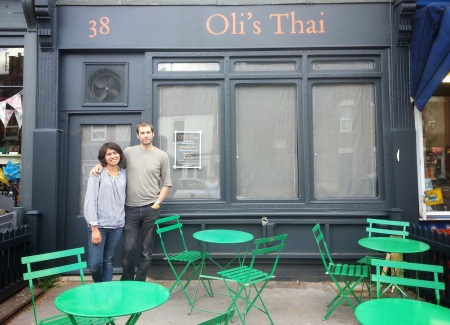
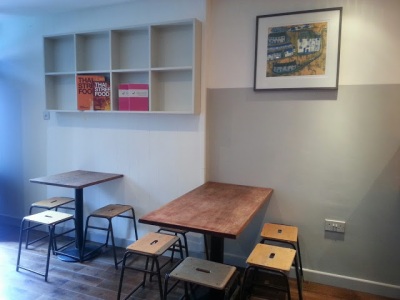
Oli’s Thai opened last summer and is a real family affair. Not only is it run by husband-and-wife team Ru and Ladd, who met working a local Thai restaurant (Chiang Mai), but the eponymous Oli is their four-year-old son. I don’t know whether it’s because I knew that before going, but, despite the simple (but nice!) decor, the restaurant also seems to have a ‘homely’ feel that makes it really feel like a family-run business – partly because of the friendly staff, and partly because it’s so small. I think I counted five tables, not including the seats at the bar in the window. Despite this, they hadn’t crammed the tables in – which you might expect considering they were turning people away later in the night – so you never feel like you’re on top of your surrounding diners.

IMG_20140308_190650 (2)

That said, the first thing we actually noticed was the amazing smell. So mouths already watering and stomachs rumbling, we decided to share some prawn crackers to start. These came with perhaps the best peanut satay dip I’ve ever tasted. My friend, K, also had some sweetcorn fritters and chilli sauce. I was forced to try one (all in the name of research and enabling K to eat her main course, obviously). They too were brilliant – really fresh and just the right amount of crumbly. And this is coming from someone who’s not a huge sweetcorn fan.

IMG_20140308_193842

For mains, I went for the duck penang curry (at £10, the most expensive thing on the menu), a leg of duck served on the bone, covered in a tomato-y-coconutty curry sauce and served with green beans. It was amazing. The meat was tender but its skin crisp and the sauce was equally as perfect. K went for the aubergine curry (£7.50), which she said was really, really good. Both dishes came with plenty of sticky, white rice; it was only afterwards I realised how refreshing it was that this was part of the menu price.
Oli's Thai-Oxford-FoodieOnTour (5)

Despite the restaurant being full (we booked, which I’d definitely recommend) and their aforementioned having to turn people away, we weren’t rushed at all throughout our meal. And that’s even without us being particularly big spenders – the shared prawn crackers, starter, 2 mains and 2 alcoholic drinks (a beer and a cider) came to just £18 each, including tip.

Overall it was a great evening – great food in a relaxed, friendly atmosphere. Although there may be plenty of new restaurants to try in Oxford, I can see me forgoing them to come back here many, many times.

The details
Oli’s Thai
38 Magdalen Road, Oxford, OX4 1RB
http://olisthai.com/
Booking: Recommended. Only taken by phone, 01865 790223

Photos
1st photo courtesy of TripAdvisor
Exterior photo of Ru and Ladd and second interior photo from Foodie on Tour
Photos of prawn crackers and curries my only, please credit if re-using
Food Friday: James Brooke Bistro & Cafe, Kuching

james brooke necesarry indulgences

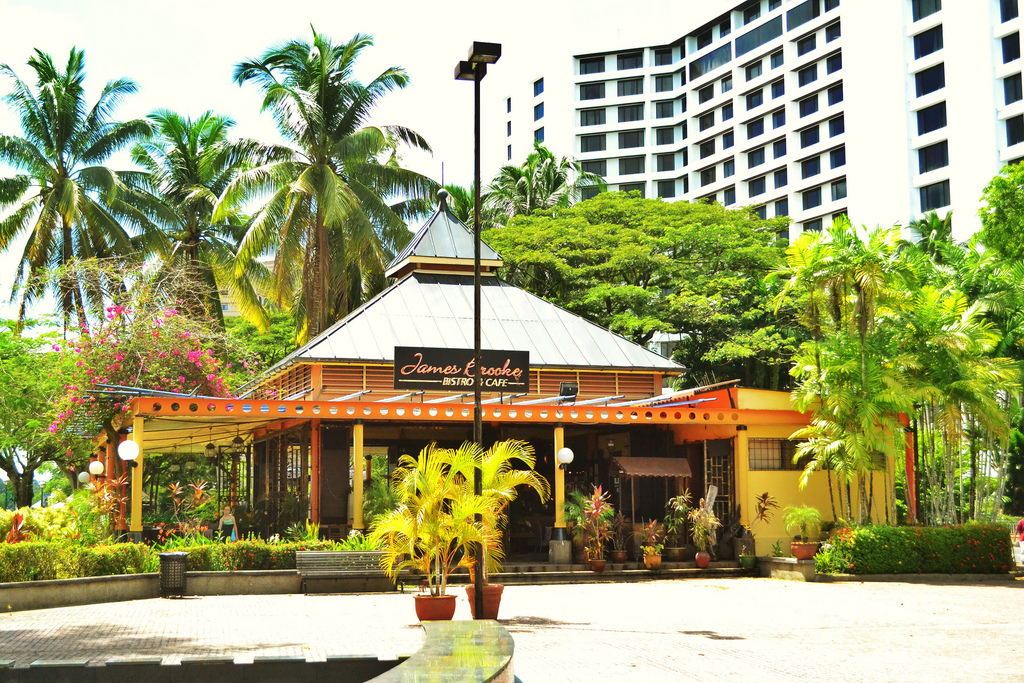
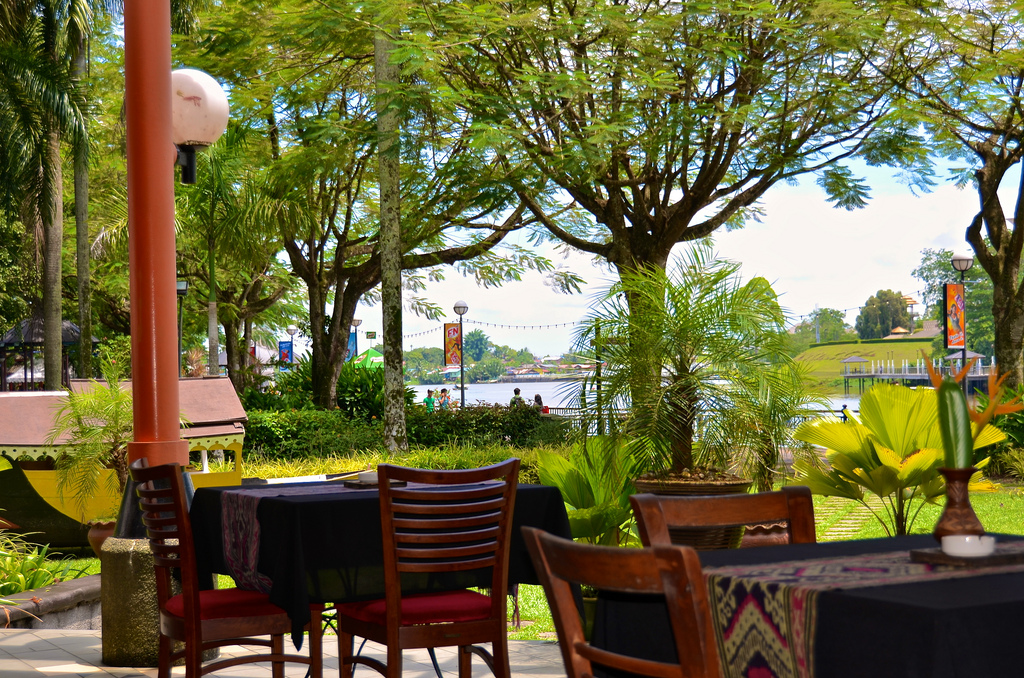
A double post today – I spoil you, I know. But I wasn’t organised to get my last post up before today, and I felt I had to give you a sense of Kuching’s waterfront before telling you about James Brooke bistro, a pavilion-style, open-sided restaurant which overlooks the river from the Chinese History Museum end of Jalan Bazaar.

After spending two days eating in Singapore’s – tasty, but not hugely relaxing – hawker centres, we decided to treat ourselves to dinner at a ‘proper’ restaurant. In my last post, you might have got an idea of how electric Kuching’s waterfront promenade is, especially after dark. So a restaurant overlooking it – close enough to observe some of the hustle and bustle, but set back enough to feel out-of-the-way – was immediately appealing.

The restaurant’s decor itself was equally attractive. The tables are surrounded by plants and an array of what looked like traditional crafts pieces, big and small.

Although you’ll probably find more authentic recipes in some of the city’s hawker centres, James Brooke bistro offers a Malaysian menu featuring typical rice and noodle dishes – which come as generous portions. These include their ‘special’, a Wild Borneo Laksa, as well as the traditional Sarawak Laksa; I can highly recommend the latter – rich, creamy and slightly spicy, but not overpoweringly so.

james brooke sarawak laksa necessary indulgences

(There are also more Western-style food options on offer, but these were more expensive. But as we both tried the – excellent – Malay dishes, I’m afraid I can’t offer an opinion on these.)

Although the restaurant was relatively busy, it wasn’t full. So we could eat and drink at a leisurely pace, enjoying the flavours in our food and drink and taking in the sites around us.

From memory, two main courses, a lime juice (the obsession continued…) and a beer came to about £10 – so while not cheap for Asia, it’s certainly good value for us Westerners.

If you don’t mind being a bit of a tourist (most of our fellow diners were also clearly holidaymakers. Or should that be ‘travellers’?), James Brooke bistro is the perfect place to try some Malay dishes while soaking up the magical Kuching nighttime.

james brookes modern nomad

James Brooke asiaforvisitors

PS. Wandering about the name? Find out more about James Brooke here

The Details
James Brooke Bistro & Cafe
Jalan Tunku Abdul Rahman, Kuching – at the end of the waterfront promenade
Phone: 0145204007 (no website)
Booking: I’m not sure if it’s an option, but it didn’t seem to be necessary

Photographs
First interior photo, Sarawak Laksa: Necessary Indulgences
Exterior shot: Emre Bennett on Flickr
Second interior shot: Asia for Visitors

Kuching Waterfront

waterfront

Being a bit of a feline fanatic, it was inevitable that I’d feel a certain fondness for a city whose name – coincidentally, rather than intentionally – means ‘cat city’. They don’t let you forget it either – Kuching has so many cat statues that Lonely Planet lists them as one of its top sites of interest.

But there’s more to Sarawak’s capital than novelty roundabout decorations. And although many use Kuching just as a base for exploring the many nearby nature destinations, it’s worth spending a few days exploring the city itself. This is the first of a few planned posts about our time here, starting with the first place we (admittedly, probably like most visitors  to Kuching) really visited here, the Waterfront.

waterfront4

This stretch of pedestrianised pavement along Jalan Bazaar has multiple personalities. Until mid-afternoon, it’s restrained and gentle, in contrast to the strains of karaoke that, even before lunch, float across the river. The ideal spot for a quiet stroll and, at lunchtime, to sample some (cheap, tasty and, for some pieces, freshly made – we watched ours be chopped up) spring rolls, chilli sauce and fried bananas from the food carts.

Waterfront food

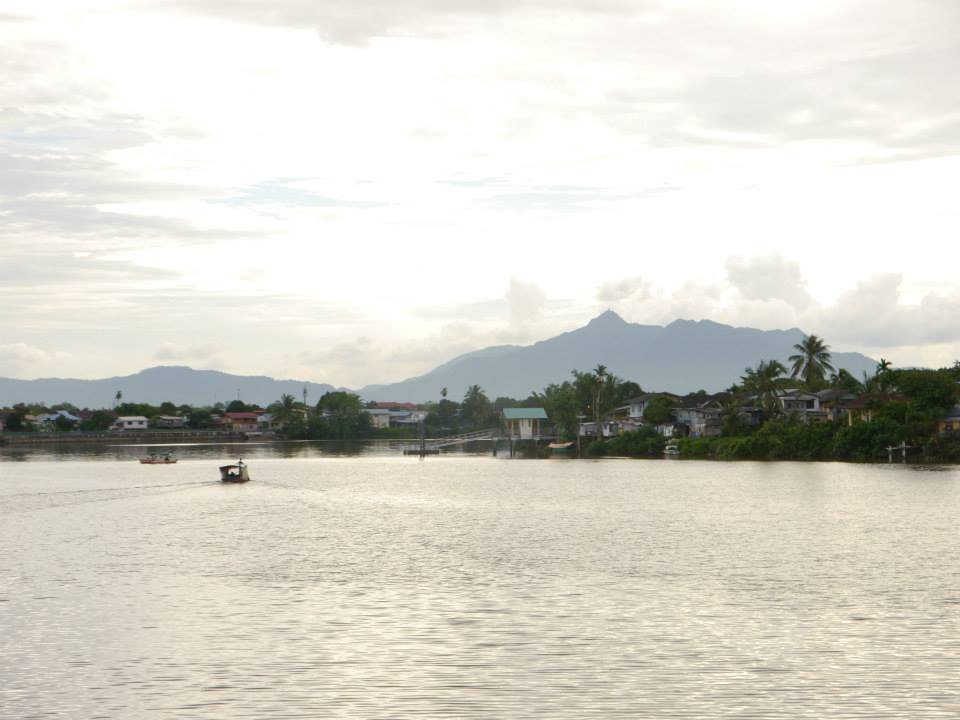
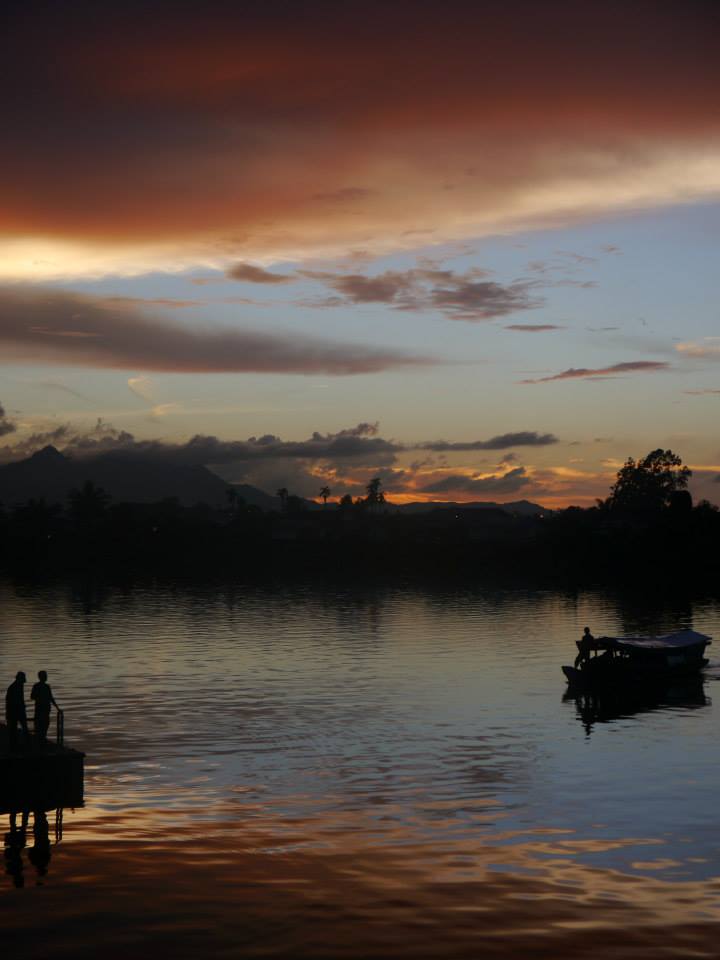
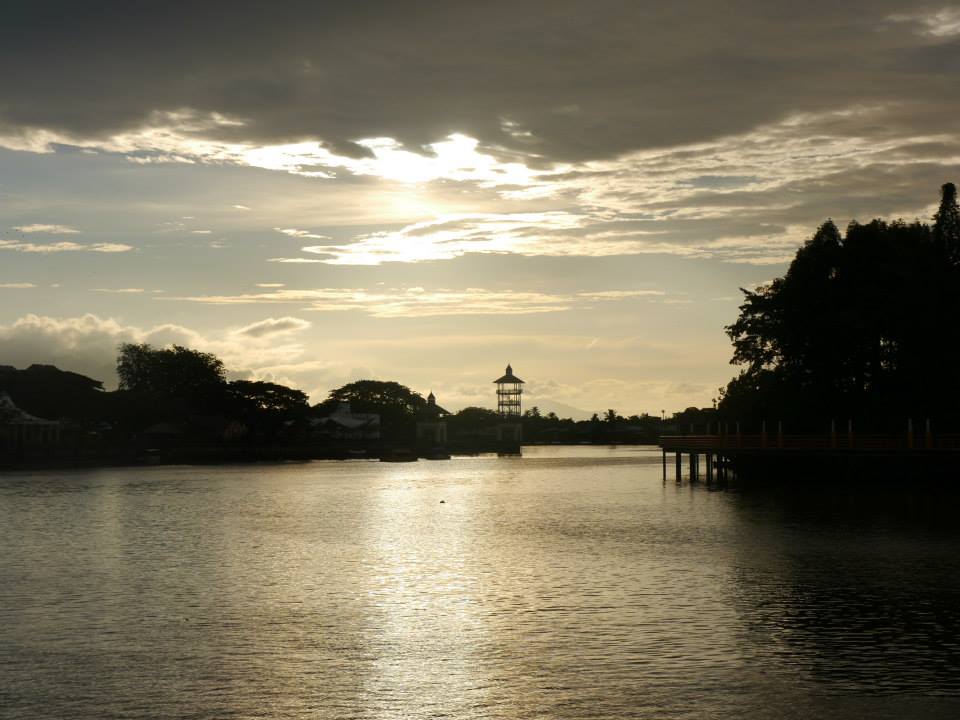
Sunset casts a spell here. The river is surrounded by mosques and their hauntingly beautiful Calls to Prayer collide on the breeze as sampan (boat) drivers glide across the water.

waterfront7

As darkness falls, a different kind of music takes over. Buskers playing every kind of instrument invade the pavements and draw huge crowds. Behind them, families, friends and couples promenade, while others line the walls and steps, chatting.

waterfront5

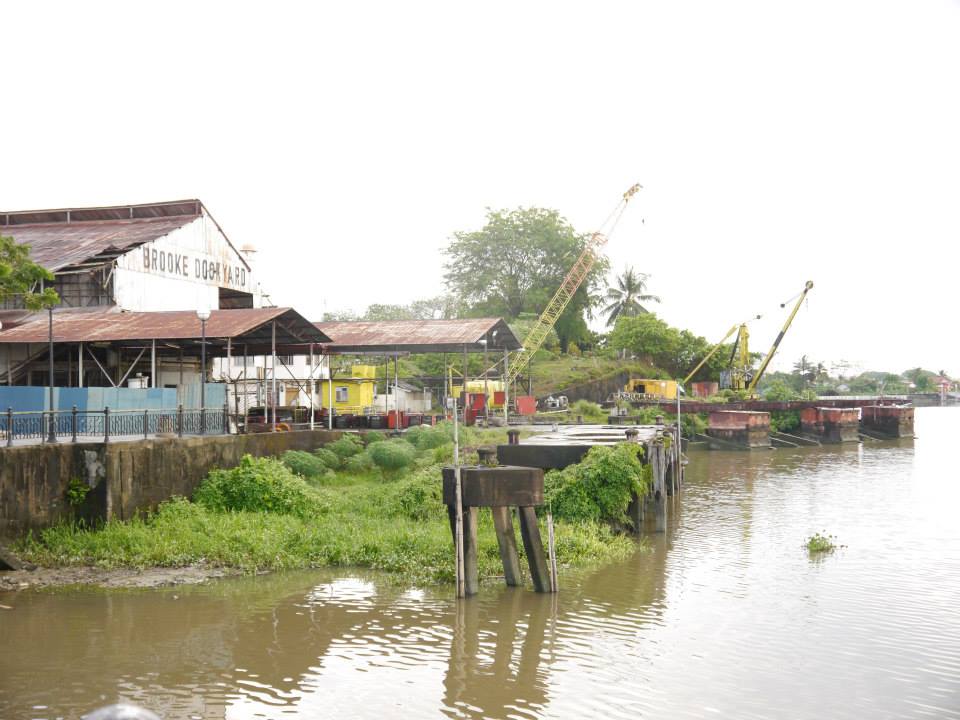
And that’s all without mentioning the changing view as you walk along – colourful stilt houses become the distinctive Astana government building which becomes mountains rising in the background.

waterfront2

All in all, not a bad introduction to the Bornean leg of our adventure.

waterfront view

All photos my own – please credit if using

Food Friday: The Potted Pig, Cardiff

pottedpigrest2

I graduated from Cardiff University in 2009. In many of the (numerous) photographs taken as we made our way to the ceremony at St David’s Hall, the second-most noticeable thing about them is a strong sense of change. (The first is how ridiculous I look: swamped in a gown and the red-and-white hood already falling off my shoulders, I definitely do not look like someone old and mature enough to have recently started their first ‘graduate’ (aka salaried) job.)

Not just change in the metaphorical sense (graduating into a life without 10% Topshop discount and constant lie ins, and having to work more hours in a day than I spent in lectures in a week. Why was I smiling in those photos again?). But in a very literal one too. You can see streets temporarily narrowed to pedestrians as improvement works took place, buildings clad in scaffolding.

Five years on, that part of the city centre is barely recognisable to me. These were the streets we only stumbled down to get to Walkabout* and Welsh Club and Chippy Ally (Caroline Street). The occasional visit to Hobos. The road to the train station, where I could be whisked back home for much-needed weekends of sleep and Sunday roasts (my parents’ house was still ‘home’ then). (*I would apologise for my 19-year-old self’s choice of venue here, but I can’t bring myself to: Thursdays at Bounce were both horrendous and brilliant in equal measure.)

But the extension of St David’s shopping centre has not only brought shiny chain and designer shops and restaurants to this corner of the city. It also seems to have attracted independent businesses, many of which (judging by an extremely scientific survey of those who stayed in Cardiff’s Facebook statuses over the last few years) have fast become renowned among locals for all the right reasons.

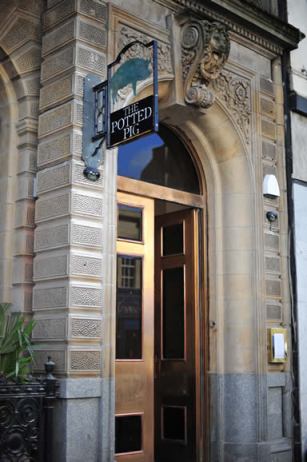
pottedpigentrance

One such place is The Potted Pig restaurant, which opened in 2011. So when my Dad asked for recommendations of places in Cardiff to take Mum for her birthday meal a couple of weeks ago, I knew I had to suggest it. (They aren’t Cardiff natives, but were going on holiday to Tenby, so we hopped across the bridge to join them mid-journey for the festivities.)

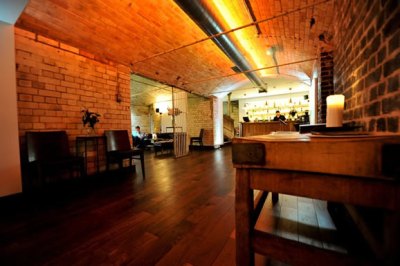
Sat near the top of the High Street, The Potted Pig is situated in a former bank vault. Some of what I assume are the original features are still intact, with bars separating a lounge-y area from the more-formal-but-still-(relatively)-informal, small restaurant at the back. The walls and arched ceilings are exposed brick. This all makes it sound a bit trendy and try-hard, but it’s actually the complete opposite – relaxed, unpretentious.

pottedpigbarentry

We visited on a Saturday lunchtime and all chose to ended up eating from the lunch menu. While the main menu was tempting, we just simply weren’t in the mood for the slightly fancier food it offers on that particular occasion. The lunch menu is simpler, more ‘pub foody’ – and at 2 courses for £12 it’s amazing value.

Between us we tried the truffled Welsh rarebit and courgette and Stilton soup starters, both of which got the thumbs up from everyone. For mains, Dad and sister Hannah went for the burger and the rest of us went for the pulled pork sandwich. I’ll be honest, it’s quite hard to review this more simple kind of food in any depth so all I’ll say is that the portion sizes were huge, but it certainly wasn’t a case of quantity over quality; we all thoroughly enjoyed our feast.

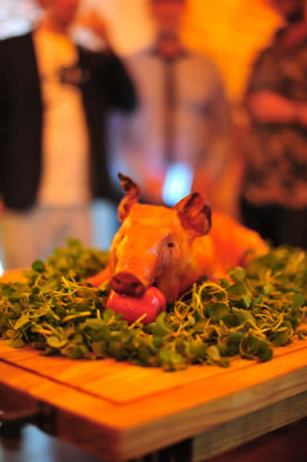
If that doesn’t sound like what you’re after, do check out the wider range of choices on the main menu. They’re more expensive (starters are £6-£8 and mains are around £16-£22, stretching to £27 for the 16oz porterhouse steak), but I’m told absolutely worth it. The menu highlight has to be the fact that you can order a whole pig. Well, you can if you pre-order. And there’s eight of you. And you don’t mind paying £300. Still, it’s AN ENTIRE PIG. (And photos suggest it even comes with an APPLE IN ITS MOUTH.)

pottedpigpig

You might have noticed from all this meat-talk (and the restaurant name) that this is not a particularly vegetarian-friendly restaurant. There were a couple of meat-free option on the lunch menu, but I couldn’t see any mains that looked like they might be. So I’m afraid this might not be one for any herbivores reading.

One thing the menu isn’t lacking, however, is drinks choices. My Mum was particularly excited by the huge number of gins on offer. There’s also a decent selection of wines, ciders, beers and non-alcoholic drink.

Overall The Potted Pig turned out to be the perfect place to wile away a Saturday lunchtime. The staff were friendly, everything happened at a good pace – despite the restaurant being pretty much full, we weren’t at all rushed – and the food was tasty. I can certainly see why this fast became a firm favourite among my local friends. I’m just hoping it won’t be too long before I can go back and try the main menu – there’s some crab on toast and a steak with my name on it!

pottedpigbar

The details
Where: 27 High Street (underneath Zizzi), Cardiff, CF10 1PU
Website: http://thepottedpig.com/
How to book: You can book online or by phone on 029 2022 4817. Deposits are required for bookings of 6+, and they cannot accommodate parties larger than 8.
Menu: Lunch / Dinner / Sunday

Images
All pictures taken from The Potted Pig website.

Singapore: beyond the skyscrapers

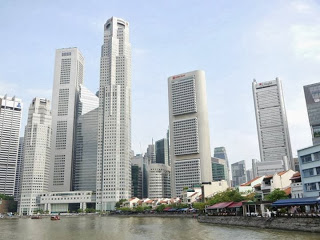
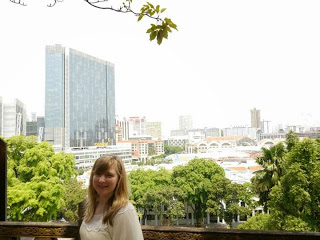
We meander through the Starbucks-ridden Central Business District, down the gleaming could-be-anywhere Orchard Road with its high-rises and designer shops and cleaners sweeping away every leaf that falls from the perfectly-manicured trees that line it, around historical Clarke Quay, now overrun with tourist-trap bars, restaurants and clubs.

At first glance, it’s easy to see why many view Singapore as ‘soul-less’. It’s that bit too ordered, too tidy, too modern and money-focused. If you travel lazy, if you don’t stray far from the more modern, built-up areas, then Singapore won’t give you much in return besides a few decent photos from the roof of the Marina Bay Sands hotel – and a much lighter wallet. Some people don’t mind that, but I find it stifling (and not just because of the city’s all-pervading humidity).

But as we follow our feet through Singapore, we soon find it doesn’t take much to get beneath its skin. Even Orchard Road is book-ended by a chain of less-salubrious shops – they didn’t look seedy, but they certainly detract from the city’s sterile reputation.

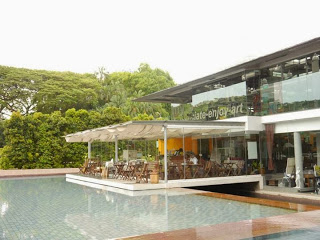
Between the perfectly-pruned trees of Istana Park we discover My Art Space, a cafe-cum-art workshop. On the ground floor, shoppers and tourists (ex-pats?) and locals seeking a quiet retreat sit with drinks at garden-style tables, gazing over the park’s impressive pond. Upstairs, artists and makers can hire workshops; a pick-n-mix of their work is dotted around the halls, on the stairs. In the glass-walled studio, an art class takes place. We try not to stare too blatantly, but the paintings (in particular, a bright flower) taking shape on the easels are too eye-catching.


Further down from Istana Park, at the very bottom of Orchard Road, we follow some stairs cut into a grassy hill. They lead us inside Fort Canning Park. We play ‘guess-the-scent’ in the spice garden, take in ancient archaeological sites and discover the entrance to an underground military complex – Battle Box (sadly on this occasion it’s closed so we can’t explore further). It is quiet here. We see a few other pairs of tourists, but we are often alone. Fort Canning Park is not the life and soul of the city, it is a place to slow down. To – quite literally – stop and take in the view.

>

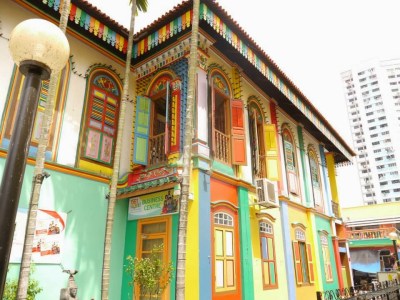
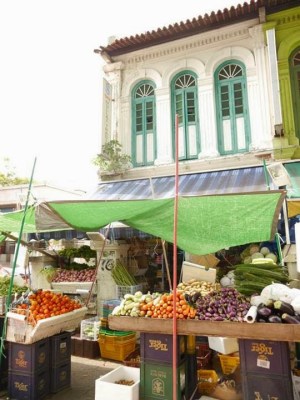
Little India – the area around Serangoon Road – is a breath of fresh air for an entirely different reason. The ordered streets so common in Singapore give way to dusty, crowded pavements and roads, cars to mopeds, silver skyscrapers to two-storey buildings bursting with colour. The open-fronted shops spill outside, showcasing vivid fabrics, gold, fruit and vegetables stacked atop beer crates. On the top floors, we spy washing hung to dry – signs of real life. The smell of spices and meats waft from enticing restaurants, mash in the air. In the hawker centre, food is eaten by the hand. It is still, of course, touristy – bars advertise ‘special’ drinks deals and the curious side-streets are home to numerous hostels – but exploring here is exciting and intoxicating and incredibly satisfying.

Chinatown’s main streets are filled with ‘souvenir’ shops; you have to work harder to unearth its charms. We find it in the quiet side-streets; when people-watching in the hawker centres; coming across the understated, slightly wonky ‘offering’ to the Gods on the quiet street of our hotel; in the stunning Temples and mosques and the pretty houses against the backdrop of the Central Business District’s shining towers.


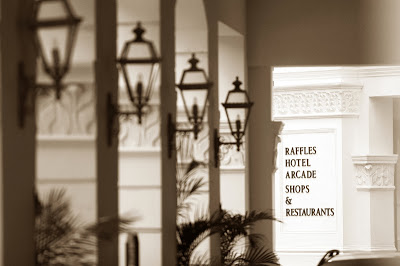
Even wandering off-piste in Raffles Hotel offers rewards. Walking on the outside of the shops, along their back doors, we spy locals hard at work crafting new items to sell.

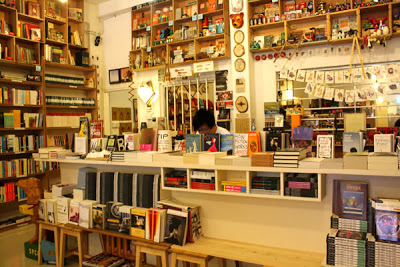
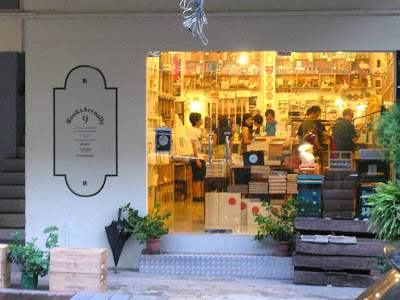
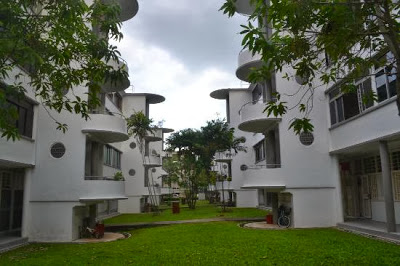
Later I insist on visiting Tiong Bahru. Books Actually on Yong Siak Street proves worth the trip. Books in the front – a huge variety and plenty of lots of local literature on offer – vintage trinkets in the back. Outside, a piano is painted on the pavement and the storefront patio is filled with plants. We are further rewarded for going slightly off-the-beaten-track with excellent food in Tiong Bahru Market, the local hawker centre. You can tell, from the increased (curious, non-threatening) glances we attract from locals that tourists are less common around here, though apparently this is changing. The area has an interesting history, too – it was the first Singapore housing estate, built in the 1930s. Despite being mass-built, the architecture is actually quite appealing; white-washed, mid-rise, patches of glass. But since the opening of Books Actually, the surrounding area is now ‘up-and-coming’, a ‘hipster’ haven. Fascinating, small independent bars and bakeries, restaurants and clothes shops are everywhere. I peer in their windows and wish we had come earlier in the day, that we had enough time to explore more of this ‘quirkier’ side to Singapore. (Though I admit I leave with mixed feelings; I hope this gentrification hasn’t negatively affected the people who have always called Tiong Bahru home.)


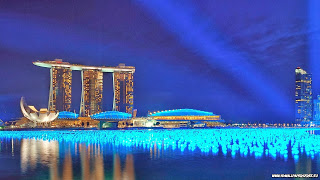
There are many other areas (Kampung Glam, Lavender, surrounding islands) that – we read – will offer a different insight into this country. But we only have 48 hours, we’re a little jet-lagged and we’re adjusting to the climate, so there’s a limit to how much we manage to see. After Tiong Bahru, we decide to spend our last night embracing our tourist status down by Marina Bay (after all, they’re popular sites for a reason. Strike the balance, don’t miss out on some of the best bits of a city by bearing a tourism snob). On the walk from Esplanade MRT station, we take a pedestrian underpass. We suddenly find ourselves on the outskirts of groups of street-dancers, hypnotic as they contort into shapes, moves, practice routines. This is perhaps the most unexpected thing we stumble across in Singapore – and it’s right in the middle of a tourist hotspot. (Incidentally, Marina Bay at night is quite beautiful. Couples lean against one another on the steps, we join in with the many taking self-portraits, enjoy watching the glass boats zip across the harbour, their lights flashing different colours.)

Lesson learnt – make the effort to visit the slightly ‘quirkier’ areas of Singapore, but don’t avoid the places that seem ‘boring’ at first glance. If you’re prepared to scratch beneath the surface then you might be pleasantly surprised.

Image Credits
All images my own except for those listed below. Please credit if re-using.

All images from external sources link to original webpage

Marina Bay Sands across the harbourside: http://srtoverseas.com/?page_id=1656
Raffles Hotel: Raffles Hotel
Books Actually interior: Ficsation Blog
Books Actually exterior: Design Spotlight
Tiong Bahru estate: Doverproperty via Tripadvisor
Dancers in Esplanade: Asia One